[항공 기술 시리즈 #01] 가스 터빈 엔진의 정의와 역사: 제트 추진의 기원을 찾아서
작성자: Blue Engineer | 카테고리: 항공우주/Gas Turbine Engine | 작성일: 2026. 02. 09.
안녕하세요. 항공 공학의 깊이 있는 지식을 나누는 Blue Engineer입니다.
오늘부터 대장정의 시리즈로 연재할 주제는 항공기의 심장, 가스 터빈 엔진(Gas Turbine Engine) 입니다. 항공기 정비사, 조종사, 혹은 항공 공학을 공부하는 학생들에게 이 엔진은 가장 매력적이면서도 정복하기 까다로운 분야 중 하나죠.
같이 공부하는 기분으로 계속해서 포스팅해 나갈 예정이니 참을성 있는 분들의 많은 구독 바랍니다.
그 첫 번째 시간으로, 우리가 흔히 '제트 엔진'이라 부르는 이 기계의 정확한 정의와 인류가 어떻게 하늘을 정복하기 위해 엔진을 발전시켜 왔는지 그 배경을 심도 있게 살펴보겠습니다.
1. '제트 엔진'은 슬랭(Slang)이다? 정확한 정의 바로잡기
우리는 일상적으로 '제트 엔진'이라는 용어를 사용합니다. 하지만 항공 기술 분야에서 이는 일종의 속어(Slang)에 가깝습니다. 정식 명칭은 가스 터빈 엔진(Gas Turbine Engine) 입니다.
많은 입문자가 '가스(Gas)'라는 명칭 때문에 자동차처럼 가솔린(휘발유)을 주 연료로 사용한다고 오해하곤 합니다. 하지만 여기서의 가스는 연료의 종류가 아니라 '작동 유체의 상태' 를 의미합니다.
- 증기 터빈(Steam Turbine): 물을 끓여 만든 수증기의 힘으로 터빈을 돌림.
- 가스 터빈(Gas Turbine): 공기와 연료의 혼합물이 연소하여 발생한 고온·고압의 연소 가스가 직접 터빈을 돌림.
즉, 엔진 내부에서 연소한 가스가 터빈을 회전시키고, 그 에너지를 통해 압축기를 구동하며 최종적으로 고속의 가스를 배출하여 추진력을 얻는 일련의 과정을 수행하는 장치를 말합니다. 본 시리즈에서는 전문적인 맥락을 유지하기 위해 '가스 터빈 엔진'이라는 용어를 주로 사용하겠습니다.
2. 항공기의 발전을 이끈 '심장'의 역사
항공 역사를 논할 때 가장 많이 언급되는 질문 중 하나가 "기체가 먼저인가, 엔진이 먼저인가"입니다. 마치 닭과 달걀의 싸움 같지만, 공학적 관점에서 보면 답은 명확합니다. 가볍고(Lightweight) 강력한(Powerful) 엔진의 부재는 초기 인류의 비행을 가로막았던 가장 큰 장벽이었습니다.
2.1 내연기관의 성숙과 라이트 형제
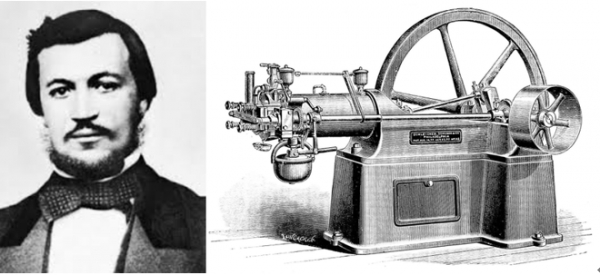
1876년 니콜라우스 오토(N. A. Otto) 가 4행정 내연기관을 발명하면서 인류는 비로소 비행 가능성에 다가섰습니다.
이후 1890년대 다임러(Daimler)가 8마력 엔진을 통해 비행선(Dirigible) 비행을 성공시켰지만, 이는 고정익 항공기를 띄우기엔 역부족이었습니다.
우리가 잘 아는 라이트 형제(Wright Brothers) 의 1903년 첫 비행이 위대했던 이유도 여기에 있습니다. 당시 시중에 그들이 원하는 출력 대 중량비(Power-to-weight ratio)를 갖춘 엔진이 없자, 그들은 직접 4기통 수평 대향형 엔진을 제작하여 하늘로 날아올랐습니다.
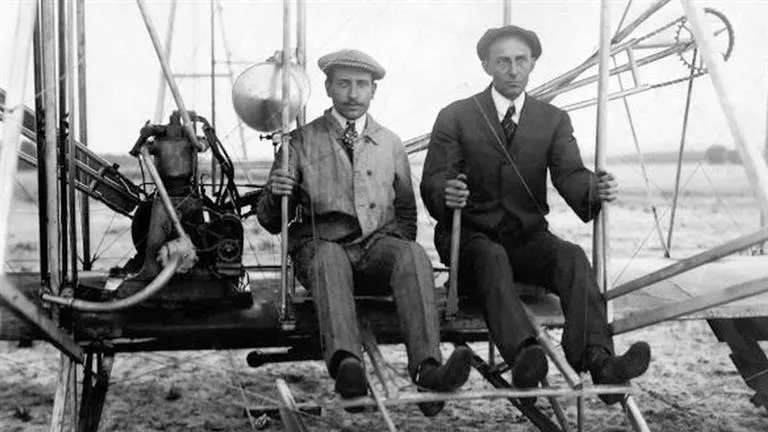
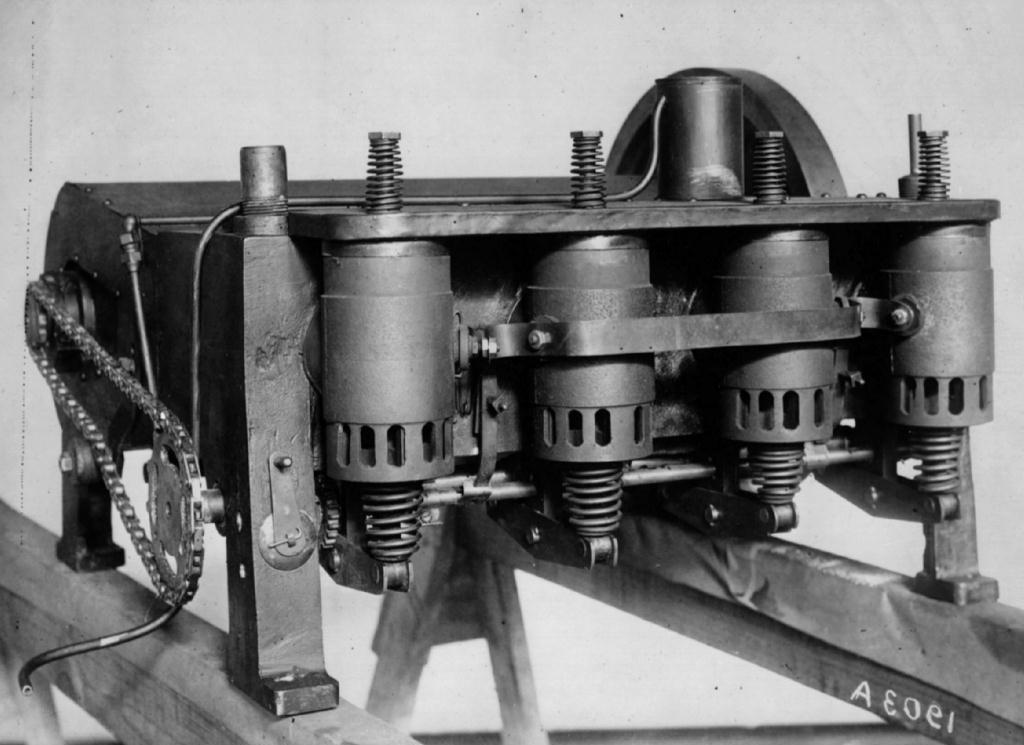
이후 글렌 커티스(Glenn H. Curtiss) 등의 선구자들이 더 효율적인 엔진을 개발하며 항공기는 더 빠르고 높게 비행할 수 있게 되었습니다.
2.2 피스톤 엔진의 한계
초기 항공기는 모두 프로펠러를 돌리는 피스톤 엔진(Reciprocating Engine) 방식이었습니다. 하지만 비행 속도가 음속에 가까워질수록 프로펠러 끝단의 충격파 문제와 고도 상승에 따른 공기 밀도 저하로 인해 피스톤 엔진은 물리적 한계에 부딪혔습니다. 이를 극복하기 위해 등장한 혁신이 바로 가스 터빈 방식이었습니다.
3. 제트 추진(Jet Propulsion)의 고대적 기원
가스 터빈 엔진은 현대 공학의 정수이지만, 그 기본 원리인 '제트 추진' 은 수천 년 전으로 거슬러 올라갑니다.
3.1 중국의 화약 로켓과 제트 추력
역사학자들에 따르면, 13세기 중국에서는 이미 화약(Gunpowder)을 이용한 로켓을 전쟁에 활용했습니다. 실린더 내부에서 화약이 연소하며 발생하는 가스가 한쪽 구멍으로 분출될 때, 그 반대 방향으로 발생하는 '밀어내는 힘(Push)' 을 발견한 것입니다.
이것이 바로 현대 항공 역학의 기초가 되는 뉴턴의 제3법칙(작용-반작용의 법칙) 의 실전 응용이었습니다.
3.2 작동 원리의 시각화
이 원리를 이해하기 위해 풍선을 떠올려 보세요. 입구를 묶지 않은 풍선을 놓으면 공기가 뒤로 빠져나가며 풍선은 앞으로 나갑니다. 가스 터빈 엔진은 이 과정을 연속적이고 효율적으로 수행하기 위해 다음과 같은 기본 사이클을 가집니다.
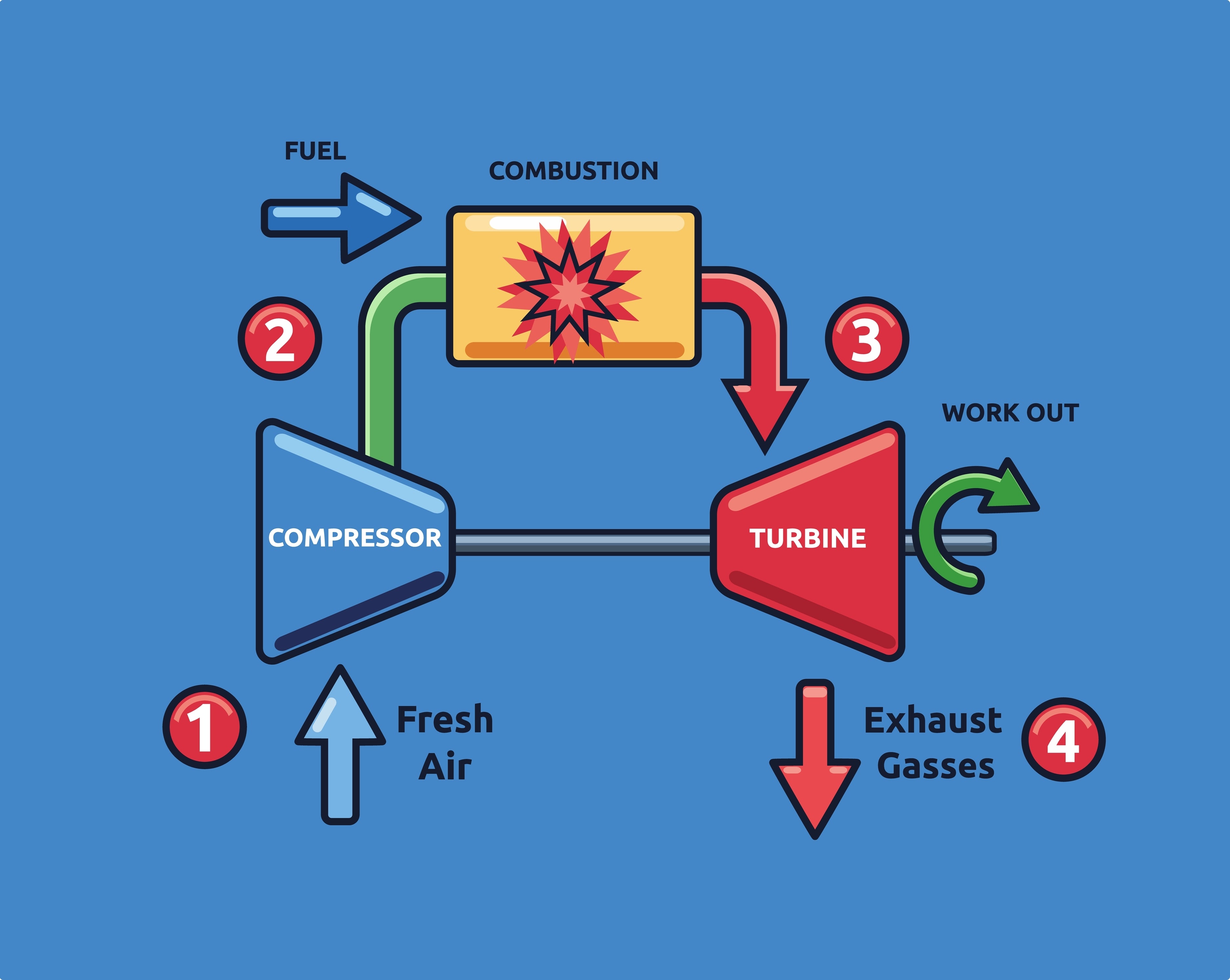
- 흡입(Intake): 신선한 공기를 대량으로 빨아들임.
- 압축(Compression): 압축기를 통해 공기의 압력을 높임.
- 연소(Combustion): 연료를 분사해 고온의 가스를 생성.
- 배기(Exhaust): 팽창된 가스를 고속으로 분출하여 추력을 발생.
4. Blue Engineer의 인사이트: 왜 가스 터빈인가?
가스 터빈 엔진이 피스톤 엔진을 대체하고 대형 항공기의 주류가 된 이유는 명확합니다.
단위 중량당 출력(Power-to-weight ratio) 이 압도적이기 때문입니다. 또한 부품 간의 왕복 운동이 아닌 회전 운동을 하기 때문에 진동이 적고 고속 비행에 훨씬 유리합니다.
하지만 그만큼 엔진 내부는 가혹한 환경에 노출됩니다. 수천 도에 달하는 연소 온도를 견디는 소재 공학, 음속을 넘나드는 공기 흐름을 제어하는 유체 역학이 집약되어 있습니다.
5. 마치며 (Section I-1을 정리하며)
오늘 포스팅에서는 가스 터빈 엔진의 정의와 그 발전의 역사를 훑어보았습니다. 요약하자면 다음과 같습니다.
- 용어 정의: 가스 터빈은 가솔린 연료가 아닌 '작동 유체(Gas)'의 상태에서 기인한 명칭이다.
- 역사적 필연성: 항공기의 비행 거리를 늘리고 속도를 높이기 위해 엔진의 경량화와 고출력화는 필수적이었다.
- 제트 추진의 원리: 뉴턴의 법칙이 정립되기 훨씬 이전부터 인류는 배출 가스의 반작용력을 이용해 왔다.
다음 시간에는 "Jet Propulsion 이론"과 "가스터빈의 작동 방법" 에 대해 본격적으로 깊이 있게 파헤쳐 보겠습니다. 항공 공학 전문가로 거듭나는 길, Blue Engineer와 함께 꾸준히 걸어가 봅시다.
궁금하신 점이나 추가로 다루었으면 하는 부분은 댓글로 남겨주세요!
[English]
[Series] The Heart of the Aircraft: Gas Turbine Engines (Section I-1)
Hello everyone, I am Blue Engineer, and I’m here to share in-depth knowledge of aerospace engineering.
Today marks the beginning of a long-term series dedicated to the "heart" of the aircraft: the Gas Turbine Engine. For aircraft mechanics, pilots, and aerospace students, this engine is one of the most fascinating—yet challenging—subjects to master.
I’ll be posting this series as if we are studying together, so I invite all curious minds to subscribe and follow along.
In our first session, we will clarify the exact definition of this machine (often colloquially called the "jet engine") and explore the historical background of how humanity evolved engine technology to conquer the skies.
1. Is "Jet Engine" Just Slang? Correcting the Definition
In everyday conversation, we use the term "jet engine." However, in the professional world of aviation technology, this is something of a slang term. The formal technical name is the Gas Turbine Engine.
Many beginners mistakenly assume that the "Gas" in the name refers to using gasoline as the primary fuel, much like a car. In this context, however, "Gas" refers to the state of the working fluid, not the fuel type.
- Steam Turbine: Rotates the turbine using the force of steam created by boiling water.
- Gas Turbine: Rotates the turbine directly using high-temperature, high-pressure combustion gases generated by burning a mixture of air and fuel.
In short, it is a device that uses combustion gases to rotate a turbine, which in turn drives a compressor, ultimately generating thrust by exhausting those gases at high speeds. Throughout this series, I will primarily use the term "Gas Turbine Engine" to maintain professional context.
2. The History of the "Heart" That Drove Aviation
A common debate in aviation history is: "Which came first, the airframe or the engine?" While it sounds like a "chicken or the egg" scenario, the engineering answer is clear. The lack of lightweight and powerful engines was the single greatest barrier preventing early human flight.
2.1 The Maturity of Internal Combustion & The Wright Brothers
The possibility of flight drew closer in 1876 when Nikolaus Otto invented the four-stroke internal combustion engine. By the 1890s, Daimler successfully powered a dirigible (airship) with an 8-hp engine, but this was still insufficient to lift a fixed-wing aircraft.
This is why the Wright Brothers’ first flight in 1903 was so revolutionary. Since there were no engines on the market with a sufficient power-to-weight ratio, they built their own 4-cylinder horizontal engine from scratch. Following them, pioneers like Glenn H. Curtiss developed more efficient engines, allowing aircraft to fly faster and higher.
2.2 The Limitations of Piston Engines
Early aircraft relied on piston engines (reciprocating engines) to turn propellers. However, as flight speeds approached the speed of sound, these engines hit a physical wall. The shockwaves at the tips of the propeller blades and the drop in air density at high altitudes made piston engines inefficient. To overcome this, the Gas Turbine was born.
3. The Ancient Origins of Jet Propulsion
While the gas turbine engine is a masterpiece of modern engineering, the fundamental principle of Jet Propulsion dates back thousands of years.
3.1 Chinese Gunpowder Rockets and Jet Thrust
As early as the 13th century, Chinese innovators utilized gunpowder rockets in warfare. They discovered that when gunpowder burns inside a cylinder and the resulting gas is ejected through an opening, a "pushing force" is generated in the opposite direction. This was a practical application of Newton’s Third Law of Motion (Action and Reaction) long before it was formally defined.
3.2 Visualizing the Operating Principle
Think of a balloon to understand this principle. If you release a balloon without tying the end, the air rushes out the back, and the balloon propelled forward. A gas turbine engine performs this process continuously and efficiently through the following cycle:
- Intake: Drawing in massive amounts of fresh air.
- Compression: Increasing the air pressure via a compressor.
- Combustion: Injecting fuel to create high-temperature gas.
- Exhaust: Ejecting the expanded gas at high velocity to generate thrust.
4. Blue Engineer’s Insight: Why the Gas Turbine?
There is a clear reason why gas turbines replaced piston engines for large aircraft: their power-to-weight ratio is vastly superior. Furthermore, because they rely on rotational motion rather than the reciprocating (up-and-down) motion of pistons, they produce less vibration and are far better suited for high-speed flight.
However, this efficiency comes at a price. The interior of the engine is exposed to extreme conditions. It represents the pinnacle of materials science (to withstand thousands of degrees) and fluid dynamics (to control airflow moving at transonic speeds).
5. Wrapping Up (Summary of Section I-1)
In today’s post, we covered the definition and history of the gas turbine engine. To summarize:
- Definition: "Gas" refers to the state of the working fluid, not the fuel type.
- Historical Necessity: Making engines lighter and more powerful was essential for increasing the range and speed of aircraft.
- Principle of Jet Propulsion: Humanity has utilized the reaction force of exhaust gases since long before the formalization of Newtonian physics.
In the next post, we will take a closer look at the Brayton Cycle, the thermodynamic backbone of the gas turbine.
Stay tuned, and thank you for reading!
Would you like me to adjust the tone to be more academic, or perhaps more casual for a social media-style blog?